Showing posts with label samsung. Show all posts

Monday, October 22, 2012

Phone or Tablet? ( I would prefer Phoblet !!!)

Don't surprise !!! Like it's word of alien world. Most of people who wants to buy smartphone or had a smartphone know something about "Phoblet".

It's simple PHONE + TABLET = PHOBLET.

Some other words also poeple use for it like phablet, phonetablet, tabphone ......etc........
But the concept is, size of Phoblet is bigger than any normal phone which looks like tablet & works like smartphone.


Big size means more space to work, but it is quite heavy than phone. can't use like normal phone, can't put directly to ear, must need wired or bluetooth earphone. But with that use internet, games, application, document, ebooks works nice with that. screen is bigger which means typing is also comfortable.

Characteristics of Phoblet :
Screen size : must be > 5" or at least 5".
Processor : needs do faster because more pixels are covered. (min. 1 GHz. dual core)
Memory : 16 GB at least.
All kind of connectivity.
Phone facility is priority.

Why it is needed?

More people ask about this, Why it is needed? it is for the person who is sitting at top position in management or who just trying to show off with bigger phone. Normal people don't need this device.
Here it is depend on your uses. Most of normal people use both internet & phone at same time & data.
They need a phonebook but also need facebook, they wants chatting also wants to do tweeting. they wants make their notes also prepare documents too. Peoples in simple language need both phone & laptop in single device. So, why not take larger screen with higher processor? why select 4" screen smartphone & 14" screen laptop too. Just why don't select 7" samsung galaxy Tab 2. Your both purpose can solve in single device.


Don't hyper "what you are saying man?" this can't be possible. it's possible, just look at processors which we are used in laptop are not more than 3.0 GHz clocked they works good in desktop than laptop, we know that. Games all high end graphic games we don't play on laptop, some of them we can't play on laptop. Here, company like EA gives all it's best sellers on phone. which is better, think again.

Thursday, October 18, 2012

Moblie Phones: "The Inside Job"

At this festival season, new grand mobile exchange is available!!!

All kind of mobile available here, ICS 4.0 upgrade also available here!!!

Take maximum value of your old phone & buy new android!!!


What you read at mobile shops? 4.0" display, ICS, 1GHz processor (quite cool), blah blah blah............

Just go into mall and pick up new phone (just like ticking). HTC, Samsung, LG, Sony & new generation Micromax...........What would you buy?


I am writing this because i am facing this problem since 1 month (dated 26-sep, 2012). In India, Specially in Ahmedabad. No shopper has knowledge of mobile's actual configuration. (I can speak in front of them & i did it, too). Which one is good or better i can't throw this question on salesman.( i am salesman, too but not of mobile phones)


So, what can we do. Just go to gsmarena or flipkart or wikipedia(!!!) and compare these phones to each other. Ask yourself it is really useful for you? (except prices) Any technical information is useful to buy new phone? You pick a model of samsung & ask about the market (to your friend), annd of course they say "ya it's good but few more thousands & you can also buy this phone which has really good functionality" & we became confused (some people calls it is stress)


So, finally i do all this things, & know the whole concept about selling product to a "confused customer".

May be this article became useful to you. Caution: Valid upto new models are not launched.


1. First thing first : Money

                                       Actually it comes last.

2. Processor


Ya, if you use nokia "n series" or samsung "bada os" phone. you are using ARM processor which is production of arm corp. The higher version of this arm processors are called "Cortex". Most of new android phone has this Cortex processor. which also have different versions. A5, A7, A8, A9, .............

This is same processors which used in Apple devices. Iphone 2, 3, 3S, 4, 4S, 5..................All the models have these arm processors. and of course 


A5 < A7 < A8 < A9


OK, So phone has A9 processor it's better then all others. Now one other thing it's single core or dual core? Well, of course dual core is better. Now 1Ghz is better then 800 Mhz. & 1Ghz dual core Qualcomm is better then 1 GHz. So, eq. is 


600 MHz < 800 MHz < 1 GHz < 1 GHz dual core < 1.x GHz (/dual core)


this is basic need processors. which we seen in market with mid-range phones. & ya of course if you want to use ICS 4.0 (Ice-Cream Sandwich 4.0 Android) phone must be 1 GHz, A7 processor or higher.

Game is not end here,  This is just a processor. It can't work without instruction set & other peripherals just like motherboard in PC. Which is developed by "Qualcomm". Qualcomm has architecture named "Snapdragon" it also has version v1, v2, v3, v4........................


Sanpdragon v1 < v2 < v3 < v4  


Which phone has best processor & architecture : 

Iphone 4S - Sanpdragon v4, Cortex A9, 1.x GHz dual core                          around 40,000/-

Samsung Galaxy S III - Sanpdragon v4, Cortex A9, 1.x GHz dual core     around 38,000/-

Samsung Galaxy S II - Snapdragon v3, Cortex A8, 1 GHz dual core         around 30,000/-

Sony Xperia S - Sanpdragon v3, Cortex A8, 1.xGHz dual core                   around 28,000/-

HTC One X -  Sanpdragon v3, Cortex A8, 1.xGHz dual core                     aound 25,000/-

Sony Xperia Sola/U -  Sanpdragon v2, Cortex A7, 1GHz dual core          19,000/- / 13,000/-

Micromax Ninja A100 -  Sanpdragon v2, Cortex A7, 1GHz dual core      9,500/-


3. RAM & Internal Memory

                                           This is my most exciting area of study because it's change your buying option when you choose particular  model. Take example of Sony Xperia Series.

All model has RAM 512 MB

Sony Xperia Tipo : Internal Memory - 2.5 GB, memory slot upto 32 GB                    10,000/-

Sony Xperia U : Internal Memory - 8 GB ( 4GB for user), No memory card slot        13,000/-

Sony Xperia Neo L : Internal Memory - 301 MB, memory slot upto 32 GB               17,000/- 

Sony Xperia GO : Internal Memory - 8 GB, memory slot upto 32 GB                        18,000/-

Sony Xperia Sola : Internal Memory - 8 GB, memory slot upto 32 GB                       19,000/-

Sony Xperia P : Internal Memory - 8 GB, memory slot upto 32 GB also 1GB RAM  22,000/-  


Tell me which one you buy? Xperia Sola/U/P has Dual core 1 GHz processor other has Single core 1 GHz processor.

Same thing you should see in Samsung, HTC, LG. Samsung has ace, s, y, also in dual Sims. HTC has desire & one series. in those x,v,s,c. What would you buy?


Answer is What's your needs?  more music, more movies, more pictures get extra memory card no need to use internal memoy. But you need more apps from play store, more games you must have more internal memory because apps can't run smoothly from memory card.


For info ICS 4.0 can run with 512 RAM or higher.


4. Display

                Here comes most twist-able decision because when you select a phone with with higher processor, ram, memory & you find out display is 3.5" holy crap!!! now what? You actually think Company has to design according to user configuration devices. Sony Xperia U (my favorite one) has a same problem. it has processor & RAM which is in 22,000 phone but display is 3,5" & also no extra memory card slot.

just forgot that phone right now, 4 kind of displays are available TFT, LCD, LED, AMOLED.

well it's use for contrast. you are in day light in middle of the market. then in phone you need to contrast that in the light can see phone's screen perfectly. best result is shown in AMOLED. if phone has this screen forget all other display fector like ppi, color display or resolution........but if it's not then need to be understand which one is better.


TFT < LCD < LED < AMOLED


We all know about VGA (640X 480 ) resolution. different relational resolution is used in phone which are like QVGA (320 X 240), HVGA (480 X 420), WVGA (800 X 480), FWVGA (854 X 480). resolution is higher image is shown more accurate. also needs more processing power. 


QVGA < HVGA < VGA < WVGA < FWVGA


ppi : part per inch How many pixles are in one square inch area is called ppi. Higher ppi is good for Display.


5. All Other Factors


  • higher version of android is better than older.


  • Interface of different devices are just software, it can't change hardware. So, Samsung, HTC, LG, Sony. All of them use same hardware which described here, they only change interface Timewise or Touchwiz or sense whatever they called. also change in material of outer body of mobile, camera, speaker, wifi, Bluetooth, modem, etc. but processor, RAM, Display are one of described here.


  • For Games crazy people. There are 3 Graphic interface is available Adreno, Mali, SGX. Most of mobile phone comes with Adreno, Mali is outdated, SGX is product of Samsung,but they only use in higher version of Samsung products and licensing to apple. their versions writen with numbers. e.g. adreno 200, adreno 205, adreno 220, mali 400, SGX 530, SGX 540. Higher number is better. 

  • Sensors: 

  1. Accelerometer - linear movement  of mobile for auto rotate screen.

  2. Gyrometer - same as Accelerometer for auto rotate screen but works better than accelerometer.

  3. Proximity Sensor - when you put phone near to ear screen will be turned off beacuse of it.

  4. Compass - Point out north direction.

 Which one is best?


  1. Snapdragon v4/v3, 1.7/1.5 GHz Dual Core, Cortex A9 with 4.7/4.3" screen, AMOLED, 1 GB RAM, 8/16/32 GB memory, SGX 540/adreno 220 GPU.

                                                                    Android 4.0 supported

                                                                    This configuration not come under 25,000 RS. 

  • Then, Snapdragon v3/v2, 1.2/1.0 GHz Dual Core. Cortex A7/A8, 3.5/4.0/4.3" screen,  AMOLED/LED, 1 GB/512 MB RAM, 4/8 GB memory, SGX 530/adreno 210/adreno 205 GPU.

                                                                    Android 4.0 supported

                                                                    This configuration range 15,000 to 25,000 RS.

  • at last, Snapdragon v2/v3, 800 MHz/1 GHz Single Core, Cortex A7/A5, 3.0/3.5/4.0" screen, LCD/TFT/LED, 512 MB RAM, 2/4 GB memory, adreno 200 GPU

                                                                    Android 4.0 supported

                                                                    This configuration range 8,000 to 15,000 RS.


So, if you find model Less then this prices with higher configuration, it must be on your watch list.

Thursday, September 15, 2011

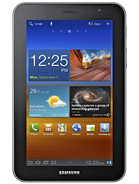
First Windows 8 tablet (from Samsung)


Microsoft has designed Windows 8 to be an operating system to work on almost any device, whether it’s a tablet, laptop or desktop. But can Microsoft really design an OS that is just as functional with a touchscreen as it is with a keyboard and mouse?
The next-generation OS has everything it needs to work on an array of devices. It contains both a desktop interface and a Metro-style interface derived from Windows Phone. It runs both touchscreen apps and traditional desktop apps like Photoshop. It boots in seconds and has greatly improved its impact on memory.
We got our hands on one of the prototype Windows 8 tablets Microsoft gave out to developers at its Build conference in Anaheim, Calif. The device, developed by Samsung, isn’t slacking in the hardware department. The 11.6-inch tablet sports an Intel Core i5 processer, a 1366×768 Super PLS display, a 64 GB SSD, 4GB of RAM and ports for USB, micro SD and HDMI. It also comes with a keyboard, dock and stylus pen.


SEE ALSO: Windows 8: Developer Preview


Let’s be clear: this device will probably never make it to market as it stands. It’s an early prototype for Microsoft’s developer community to test Windows 8, itself a prototype piece of software. Still, it provides a good sense of where Windows is headed, and whether it will be able to compete with the iPad.
Here are our first impressions of the Windows 8 tablet.

Photo Gallery: The Samsung Windows 8 Tablet


Windows 8 Metro Home Screen


This is the Metro interface in Windows 8

Internet Explorer 10 in Windows 8


This is the Metro interface for IE10. Swiping from bottom to top or top to bottom will open up the URL bar and the tab bar.

Charm Bar


IE10 sports a "Charm Bar" on the right side of the screen, where users can share content, search for content, return to the Start menu, and more.

Windows 8 Desktop Interface


The Windows 8 desktop will be familiar to any Windows user. I installed Firefox in this instance of Windows 8.

Windows Store


The Windows Store for apps isn't working quite yet...

Tweet@Rama


Microsoft's Metro Twitter app, Tweet@Rama, is very simple to use.

Windows 8 Side View


The tablet includes a USB port, an SD card slot, a mini HDMI port and more.

Windows 8 Tablet: The Back


One thing we don't like about this Windows 8 tablet is the fact that it has a fan. Then again, this device is designed to be more "robust" than an iPad. It's part of Microsoft's attempt not to compromise with Windows.

Windows 8 Tablet With Dock


The dock includes an ethernet port, a USB port, an HDMI port and a headphone jack.

Windows 8, Dock & Keyboard


Turn your Windows 8 tablet into a fully-functional PC by bringing out the keyboard and mouse.

Using the Stylus


The Samsung tablet comes with a stylus for interacting with the touchscreen. It's rather responsive and useful for applications like this drawing app.

Windows 8 Start Screen


When you boot the Windows 8 tablet from sleep, this is the screen that greets you.

Windows 8 Login


Swipe up or down and the login screen will appear.

Samsung’s Windows 8 Tablet: First Impressions


Here’s how Windows 8 stacks up as a tablet OS:
- Speed: Windows 8 is very fast. While we haven’t had a chance to bog down our build with software that would drop its performance, it’s still impressive that the tablet boots in approximately eight seconds and comes out of sleep in even less time. We have no complaints about the overall performance.
- Aesthetic: The OS itself is quite pleasing. We’ve always liked Metro as an interface, and it works well on the tablet form factor. It stands out amongst the Android and iOS interfaces that dominate the tablet market today.
In case you’re curious, Windows 8 in desktop mode looks almost identical to Windows 7 — there will be no learning curve for the desktop portion of the OS. As for the hardware itself, it’s clean and simple, just the way it should be.
- Usability: Windows 8 depends on a series of touchscreen actions to operate effectively. The entire front of the tablet is a touchscreen, which allows for different touch interactions. Swiping from the far left of the screen to the right pulls up recent apps you’ve launched, and swiping from the far right of the screen to the left in certain apps brings up the Charm Bar, where you can share content with friends.
The touchscreen interface doesn’t feel as intuitive as the iPad, but overall it works well. Once I learned the touch commands, it was easy to navigate. Even the Windows desktop was surprisingly easy to use with touch commands. I was able to use most of the desktop apps I installed with relative ease.
- Metro: The big change to Windows 8 is the addition of the Metro interface. The block style is unique and usable. We can see a lot of people, especially the less tech-savvy, enjoying the straightforward interface with a mouse or a touchscreen. Apps designed in Metro are pleasant to use overall.
- Apps: The Windows 8 Developer Preview comes with a few Microsoft-built apps as demos. They are not apps that will launch with Windows 8, but they give you an idea of what is in store for the platform.
Apps launch fast and are easy to access. The ones I played with were simple, but fun. It’s likely you could run some pretty sophisticated games on a Windows 8 tablet, thanks to Microsoft’s “no compromise” policy.
- Keyboard/Mouse: When you connect a keyboard and a mouse to the tablet (via Bluetooth or USB), the device becomes a laptop with an 11.6-inch screen. Interacting with Metro apps with a mouse wasn’t always as easy or as fun as using my fingers, but it usually did the job.
- Desktop: There’s not much to say about the desktop interface. It’s Windows 7 with some speed and design improvements. If you love Windows 7, you’ll love the Windows 8 desktop. And if you hate it, well, there’s Metro.
Conclusion: Windows 8 feels more complete than a developer preview. It feels like using two operating systems, but the fact that they transition seamlessly into each other helps bridge that gap. The touch controls need some more work, but the basic concepts are solid.
Windows 8 is positioned to become a worthy competitor to iOS on the tablet and Mac OS X on the desktop. Still, we’re concerned about the hardware needed to run it, which is far ahead of the specs of the iPad — and, at this stage, requires a fan. That will make it tough for PC manufacturers to squeeze the OS into a device that can be cheap, simple and small enough to compete with Apple.
We give credit to Microsoft for taking a bold risk with Windows 8. Our guess is that it will pay off in the long run.